Land Development in Italy: Mega-Projects Over 100 Hectares and the Case of Futuro Agrate
An overview of large-scale land development projects in Italy exceeding 100 hectares, with analysis of why Futuro Agrate's 215.3-hectare territory represents a unique investment opportunity in Northern Italy.
The Landscape of Large-Scale Development in Italy
Italy's real estate market has undergone a remarkable transformation in recent years. Once characterized by fragmented, small-scale developments, the country is now witnessing the emergence of ambitious mega-projects that rival the scope of developments in London, Paris, and Dubai. These large-scale initiatives, typically exceeding 100 hectares, represent a new paradigm in Italian urban planning—one that combines sustainable design, integrated infrastructure, and long-term value creation.
The Regulatory Framework Driving Change
Italian land development operates within a complex regulatory environment that, paradoxically, creates both challenges and opportunities:
- •Piano Regolatore Generale (PRG) — Municipal master plans that determine land use classifications
- •Permesso di Costruire — Building permits requiring 18-24 months for approval
- •Valutazione Ambientale Strategica (VAS) — Strategic environmental assessments for large projects
- •Conferenza dei Servizi — Multi-agency approval processes for complex developments
This regulatory complexity creates a natural barrier to entry, protecting established projects from rapid competitive response and ensuring that those who successfully navigate the system enjoy significant first-mover advantages.
Major Development Projects in Italy: 100+ Hectares
1. Milano Santa Giulia — Milan, Lombardy
Area: 110 hectares | Investment: €3.5 billion
Milano Santa Giulia represents one of Italy's most ambitious urban regeneration projects. Located in Milan's southeastern district, this Lendlease-led development transforms former industrial land into a mixed-use neighborhood featuring:
- •3,400 residential units across various typologies
- •Milan's third-largest urban park designed with biophilic principles
- •Commercial and retail space integrated with public transport
- •Zero-carbon emissions target through sustainable infrastructure
- •Olympic legacy — serving as a venue for Milan-Cortina 2026 Winter Olympics
The project demonstrates the potential for large-scale transformation in established urban areas, though it faces challenges typical of brownfield developments: contamination remediation, complex stakeholder negotiations, and integration with existing urban fabric.
2. Porta Romana Olympic Village — Milan, Lombardy
Area: 70+ hectares | Investment: €1.8 billion
The former Porta Romana railway yard is undergoing transformation into the Olympic Village for the 2026 Winter Games, with long-term plans for:
- •Post-Olympic student housing conversion
- •Mixed-use commercial development
- •Public green spaces connecting to Milan's urban parks system
- •Sustainable mobility infrastructure
This project, led by Coima SGR, exemplifies Italy's strategy of leveraging major events to catalyze urban regeneration.
3. Napoli Porta Est — Naples, Campania
Area: 120+ hectares | Design: Zaha Hadid Architects
Recently announced as the winner of an international design competition, the Napoli Porta Est masterplan aims to reconnect fragmented urban areas in eastern Naples:
- •New Campania Region headquarters
- •Urban park and public spaces
- •Sustainable transport infrastructure
- •Revitalization of former industrial zones
The project addresses Naples' historical challenges of urban fragmentation and social isolation through innovative design solutions.
4. EUR District Expansion — Rome, Lazio
Area: 150+ hectares | Ongoing phased development
Rome's EUR district, originally built for the 1942 World's Fair (never held), continues to evolve with new development phases:
- •Business and conference facilities
- •Residential expansion
- •Cultural institutions including the "Cloud" convention center
- •Integration with Rome's metro system
5. Cascina Merlata & MIND — Milan, Lombardy
Area: 100+ hectares combined | Investment: €2+ billion
The former Expo 2015 site has been transformed into MIND (Milano Innovation District), featuring:
- •Scientific research facilities including Human Technopole
- •University campus
- •Hospital and life sciences cluster
- •Residential development at Cascina Merlata
The Challenge of Greenfield Development
While the projects above demonstrate Italy's capacity for large-scale development, they share common characteristics that limit their appeal to certain investor profiles:
| Factor | Urban Regeneration Projects | Greenfield Territories |
|---|---|---|
| Land acquisition cost | High (urban valuations) | Lower (agricultural conversion) |
| Contamination risk | Significant (industrial legacy) | Minimal |
| Stakeholder complexity | Very high | Moderate |
| Planning flexibility | Constrained by existing context | Greater design freedom |
| Timeline to development | Often 10+ years | 5-7 years typical |
| Premium positioning | Urban convenience | Lifestyle exclusivity |
Most Italian mega-projects focus on urban regeneration—transforming former industrial, railway, or military lands within established cities. These projects offer the advantage of existing infrastructure but face challenges including:
- •Environmental remediation costs
- •Complex negotiations with multiple stakeholders
- •Design constraints imposed by surrounding urban context
- •Competition for market positioning within saturated urban markets
Futuro Agrate: The Exceptional Greenfield Opportunity
Against this backdrop of urban regeneration projects, Futuro Agrate stands as a singular exception—215.3 hectares of pristine greenfield territory positioned in one of Europe's most desirable residential corridors.
What Makes Futuro Agrate Unique
1. Scale Without Urban Constraints
At 215.3 hectares, Futuro Agrate is among the largest privately-controlled development territories in Northern Italy. Unlike urban regeneration projects, this greenfield site offers:
- •No contamination legacy — virgin land requiring no remediation
- •Complete design freedom — masterplan unencumbered by existing structures
- •Integrated infrastructure planning — roads, utilities, and amenities designed holistically
- •Controlled development phasing — flexibility to respond to market conditions
2. Strategic Location: The Golden Triangle
Agrate Conturbia occupies a privileged position in Italy's most economically dynamic region:
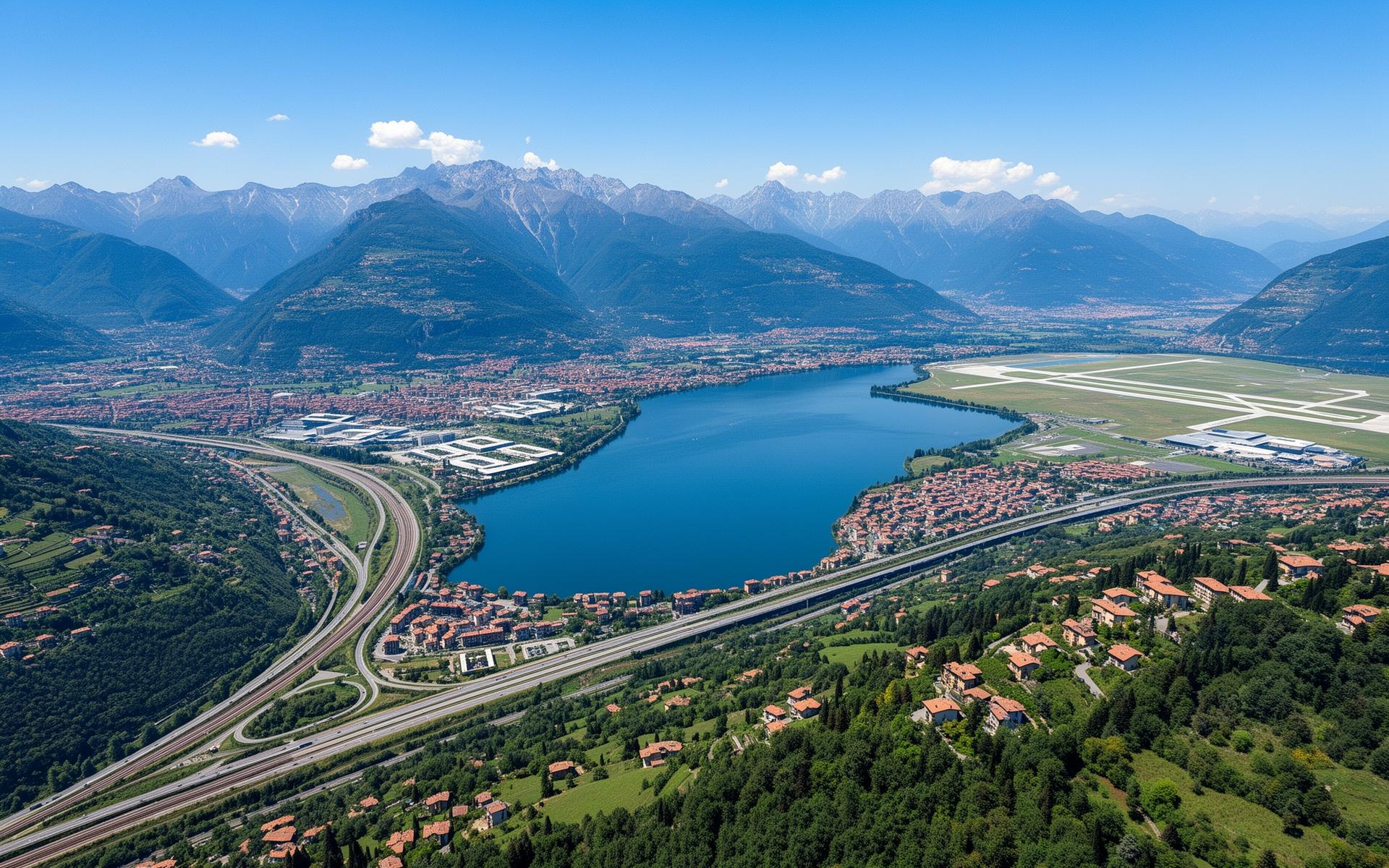
- •25 minutes to Malpensa International Airport
- •45 minutes to Milan city center (improving with infrastructure investments)
- •15 minutes to Lake Maggiore's western shore
- •Proximity to Milan-Cortina 2026 Winter Olympics venues
This location places Futuro Agrate at the intersection of international connectivity, metropolitan economy, and lakeside lifestyle—a combination unavailable in any urban regeneration project.
3. Single-Owner Control
Unlike fragmented urban sites requiring complex assembly, Futuro Agrate operates under unified ownership and management:
- •One master developer — Futuro Agrate Ltd (London-based holding)
- •Coherent vision — integrated masterplan across all 215.3 hectares
- •Streamlined decision-making — no multi-party negotiations
- •Aligned incentives — long-term value creation over short-term extraction
4. Land Bank Economics
The territory was assembled at agricultural valuations prior to urbanization approval, creating a fundamental cost advantage:
| Cost Component | Urban Regeneration | Futuro Agrate |
|---|---|---|
| Land acquisition | €800-1,500/sqm | €50-100/sqm |
| Remediation | €100-500/sqm | €0 |
| Infrastructure | Shared/existing | Purpose-built |
| Planning risk | High complexity | Secured approvals |
This cost structure enables dramatically higher margins while delivering premium positioning.
5. Lifestyle Product vs. Urban Commodity
Futuro Agrate is not competing for urban apartment buyers. It targets a distinct market segment:
- •International executives seeking quality of life near Milan
- •Entrepreneur families desiring secure, exclusive communities
- •HNW investors pursuing Golden Visa residency
- •Second-home buyers from Northern Europe seeking Mediterranean lifestyle
- •Retirees from professional careers seeking premium lakeside living
The product—luxury villas in a gated community with club amenities—has no direct competitor within 50km.
Comparative Analysis: Why Futuro Agrate Excels
| Criterion | Milano Santa Giulia | Porta Romana | Napoli Porta Est | Futuro Agrate |
|---|---|---|---|---|
| Total Area | 110 ha | 70 ha | 120 ha | 215.3 ha |
| Development Type | Urban mixed-use | Urban/Olympic legacy | Urban regeneration | Greenfield residential |
| Land Status | Brownfield | Brownfield | Brownfield | Greenfield |
| Single Owner | No (JV) | No (consortium) | Public-private | Yes |
| Lifestyle Positioning | Urban convenience | Urban + transit | Urban renewal | Lakeside luxury |
| International Buyer Appeal | Moderate | Low | Low | Very High |
| Investment Entry Point | Institutional only | Institutional only | N/A (public-led) | Private investors welcome |
The Investment Thesis
For investors seeking exposure to Italian real estate with:
✅ Large-scale opportunity (215.3 hectares)
✅ Greenfield advantages (no legacy costs)
✅ Premium positioning (lakeside luxury)
✅ Single-owner clarity (unified management)
✅ Accessible entry points (villa acquisition, SPV participation)
✅ Golden Visa eligibility (non-EU investor residency)
Futuro Agrate represents an exceptional and unrepeatable opportunity.
The combination of scale, location, ownership structure, and market positioning is not available in any other Italian development project. When compared to the urban mega-projects dominating headlines, Futuro Agrate offers what they cannot: pristine land, complete control, and lifestyle exclusivity in Europe's premier residential corridor.
Conclusion: The Rare Intersection of Scale and Purity
Italy's development landscape is increasingly dominated by urban regeneration—necessary work that transforms industrial legacy into contemporary neighborhoods. These projects serve important urban and economic functions.
But for discerning investors and residents seeking something different—unspoiled territory developed with vision, scale, and exclusivity—the options are extraordinarily limited.
Futuro Agrate is not just a development project. It is the last significant greenfield territory in the Lake Maggiore-Milan corridor, controlled by a single master developer, with infrastructure in place and urbanization secured.
Such opportunities do not repeat. They are claimed by those with the vision to recognize them.
Editorial note: this article is for information purposes and does not constitute investment advice.
Editorial note: this article is for information purposes and does not constitute investment advice.
Sources and verification
Primary sources consulted
- ISTAT — Demography, housing and regional accounts series istat.it
- Regione Piemonte — Territorial and planning documentation (PTR, PPR) regione.piemonte.it
- Comune di Agrate Conturbia — Planning instruments and building-rights documentation
- Savills Research — European residential and second-home market reports
Figures presented as ranges, uplifts or returns are model estimates based on the sources below. They are not measurements of this site and not a promise of performance.
Read the Journal by interest rather than by publication date. Each path is a sequence, not an archive.
The investor journey
8 articlesFrom how development value is created before construction to how integrated schemes are underwritten.
You are here · Step 1 of 8
- 1How Land Consolidation Creates Development Value
- 2Why Planning Rights Can Be More Valuable Than Construction
- 3Senior Secured Development Finance Explained
- 4How Institutional Investors Assess Integrated Developments
- 5Why Phasing Matters More Than the Final Masterplan
- 6Does Combining Residential, Hospitality, Wellness and Sport Actually Work?
- 7What Can Go Wrong in a Multi-Use Lifestyle Development?In research
- 8The Integrated Community as a Long-Term Investment and Living ModelIn research
The living journey
8 articlesWhat changes in how people want to live, and what a low-density community must deliver in return.
- 1Why Affluent Households Are Reconsidering Large-City LivingIn research
- 2Luxury Is Becoming Time, Privacy and ConvenienceIn research
- 3The Rise of the 15-Minute Lifestyle Beyond the CityIn research
- 4Why Nature Is Becoming an Economic AssetIn research
- 5From Second Home to Second LifeIn research
- 6How Far Are People Actually Willing to Walk?In research
- 7Why Residential Value Depends on Everything Outside the Home
- 8How a Large Estate Can Feel IntimateIn research
The operator journey
7 articlesDemand, seasonality and critical mass for hospitality, wellness, sport and food & beverage.
- 1Why Hospitality Can Accelerate Residential Demand
- 2Can Hotels and Permanent Residents Successfully Share One Destination?In research
- 3The Economics of a Food and Beverage EcosystemIn research
- 4From Spa to Everyday WellnessIn research
- 5Who Pays for Wellness and Why?In research
- 6Can Sport Reduce Seasonality?
- 7How Much Population Does an Integrated Community Need?In research
The regional brief
5 articlesNorthern Italy read as a residential and investment region rather than as a holiday destination.
- 1Northern Italy as a European Residential and Investment Region
- 2The Milan–Lake Maggiore–Swiss CorridorIn research
- 3Why Piedmont Remains Less Expensive Than Better-Known Italian Regions
- 4Climate, Landscape and Year-Round Liveability in Northern ItalyIn research
- 5Can Piedmont Become a Global Lifestyle Destination?
Investment, Planning and Value Creation
Article 1 of 5How a Large Estate Can Feel Intimate
Why Planning Rights Can Be More Valuable Than Construction