The Master-Planned Community: A Blueprint for Future European Living
How integrated territory development creates communities that work. Lessons from successful masterplans and our vision for Agrate Conturbia.
Beyond Traditional Development
The fragmented approach to land development — where separate developers build disconnected projects — is giving way to integrated master-planning. This article explores why unified territorial vision creates superior outcomes for residents, investors, and communities.
What is a Master-Planned Community?
A master-planned community is a large-scale residential development created under unified planning and governance. Key characteristics include:
- •Single controlling entity ensuring coordinated development
- •Comprehensive masterplan addressing all land uses
- •Phased delivery allowing adaptation and optimization
- •Shared amenities creating community value
- •Design guidelines maintaining quality and coherence
- •Long-term management protecting investment value
The Failure of Fragmented Development
Traditional development creates problems:
For Residents
- •Inconsistent quality between adjacent projects
- •Missing infrastructure and amenities
- •Traffic and parking conflicts
- •No sense of community identity
- •Declining maintenance over time
For Investors
- •Value erosion from neighboring developments
- •No control over adjacent land uses
- •Limited amenity leverage
- •Difficult exit timing coordination
For Communities
- •Piecemeal infrastructure strain
- •Lost tax revenue optimization
- •Environmental fragmentation
- •Social disconnection
The Master-Planned Advantage
Integrated development solves these problems:
Quality Control
- •Design review for all construction
- •Consistent materials and standards
- •Protected sight lines and views
- •Coherent landscaping throughout
Amenity Economics
- •Shared costs across larger base
- •Professional-grade facilities
- •Sustainable operating models
- •Continuous improvement investment
Community Building
- •Planned gathering spaces
- •Shared activities and events
- •Resident governance participation
- •Identity and belonging
Investment Protection
- •Covenants protecting value
- •Professional management
- •Controlled development pace
- •Exit market liquidity
Successful Global Examples
Celebration, Florida (USA)
- •Developer: The Walt Disney Company
- •Size: 4,900 acres
- •Population: 10,000+
- •Lesson: Walkability and community design create premium value
Poundbury, England (UK)
- •Developer: Duchy of Cornwall
- •Size: 400 acres
- •Population: 4,500+
- •Lesson: Traditional design principles can work at scale
Jumeirah Golf Estates, Dubai (UAE)
- •Developer: Leisurecorp
- •Size: 1,119 acres
- •Population: 5,000+
- •Lesson: Golf and lifestyle integration drives international demand
Our Vision for Agrate Conturbia
We're applying global best practices to create something uniquely European:
Scale and Scope
- •215.3 hectares of unified development
- •9 asset categories under one governance
- •15+ year development horizon
- •Permanent management structure
Design Principles
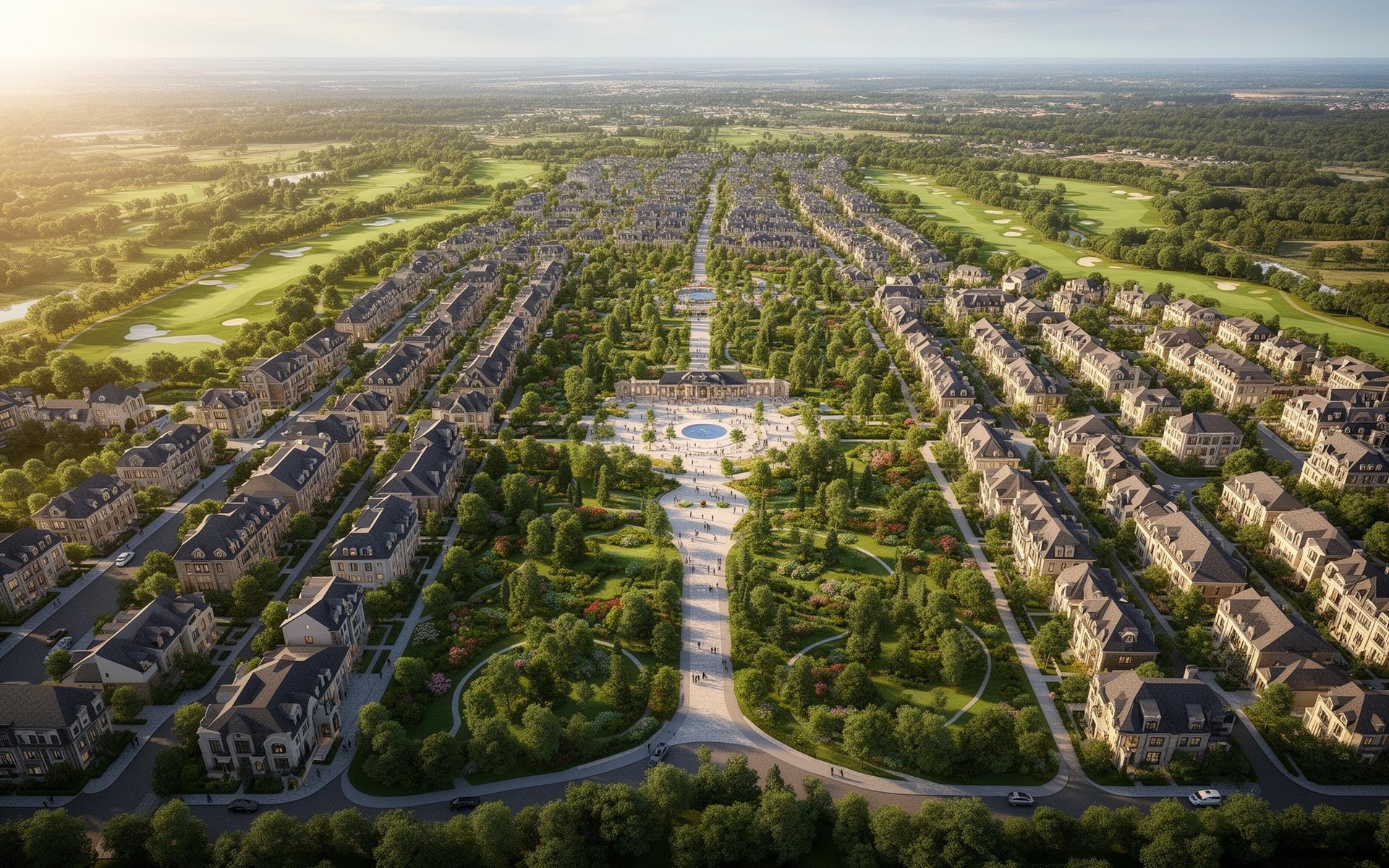
- •Low-density, green-first planning
- •Italian architectural character
- •Integration with natural landscape
- •Pedestrian and cycling priority
Lifestyle Elements
- •Golf course as community centerpiece
- •5-star hotel for resident services
- •School and healthcare on-site
- •Sports and recreation throughout
Sustainability Foundation
- •Energy-efficient construction standards
- •Green infrastructure throughout
- •Water management systems
- •Biodiversity protection
The Investment Thesis
Master-planned communities demonstrate:
- •15-25% premium over comparable individual properties
- •Lower volatility during market cycles
- •Stronger appreciation over time
- •Better liquidity at exit
Join the Vision
Agrate Conturbia offers a documented route to participate in a comprehensive European master-planned community from inception. Whether as investor, partner, or future resident, we welcome your interest.
Editorial note: this article is for information purposes and does not constitute investment advice.
Sources and verification
Primary sources consulted
- Regione Piemonte — Territorial and planning documentation (PTR, PPR) regione.piemonte.it
- Comune di Agrate Conturbia — Planning instruments and building-rights documentation
- OECD — Regional wellbeing and housing indicators oecd.org
Figures presented as ranges, uplifts or returns are model estimates based on the sources below. They are not measurements of this site and not a promise of performance.
Read the Journal by interest rather than by publication date. Each path is a sequence, not an archive.
The investor journey
8 articlesFrom how development value is created before construction to how integrated schemes are underwritten.
You are here · Step 6 of 8
- 1How Land Consolidation Creates Development Value
- 2Why Planning Rights Can Be More Valuable Than Construction
- 3Senior Secured Development Finance Explained
- 4How Institutional Investors Assess Integrated Developments
- 5Why Phasing Matters More Than the Final Masterplan
- 6Does Combining Residential, Hospitality, Wellness and Sport Actually Work?
- 7What Can Go Wrong in a Multi-Use Lifestyle Development?In research
- 8The Integrated Community as a Long-Term Investment and Living ModelIn research
The living journey
8 articlesWhat changes in how people want to live, and what a low-density community must deliver in return.
- 1Why Affluent Households Are Reconsidering Large-City LivingIn research
- 2Luxury Is Becoming Time, Privacy and ConvenienceIn research
- 3The Rise of the 15-Minute Lifestyle Beyond the CityIn research
- 4Why Nature Is Becoming an Economic AssetIn research
- 5From Second Home to Second LifeIn research
- 6How Far Are People Actually Willing to Walk?In research
- 7Why Residential Value Depends on Everything Outside the Home
- 8How a Large Estate Can Feel IntimateIn research
The operator journey
7 articlesDemand, seasonality and critical mass for hospitality, wellness, sport and food & beverage.
- 1Why Hospitality Can Accelerate Residential Demand
- 2Can Hotels and Permanent Residents Successfully Share One Destination?In research
- 3The Economics of a Food and Beverage EcosystemIn research
- 4From Spa to Everyday WellnessIn research
- 5Who Pays for Wellness and Why?In research
- 6Can Sport Reduce Seasonality?
- 7How Much Population Does an Integrated Community Need?In research
The regional brief
5 articlesNorthern Italy read as a residential and investment region rather than as a holiday destination.
- 1Northern Italy as a European Residential and Investment Region
- 2The Milan–Lake Maggiore–Swiss CorridorIn research
- 3Why Piedmont Remains Less Expensive Than Better-Known Italian Regions
- 4Climate, Landscape and Year-Round Liveability in Northern ItalyIn research
- 5Can Piedmont Become a Global Lifestyle Destination?
The Integrated Destination Thesis
Article 1 of 5Why Phasing Matters More Than the Final Masterplan
Which Amenities Reinforce Each Other — and Which Do Not?