The Futuro Journal
Research, ideas and stories exploring the future of living and investment in Northern Italy.
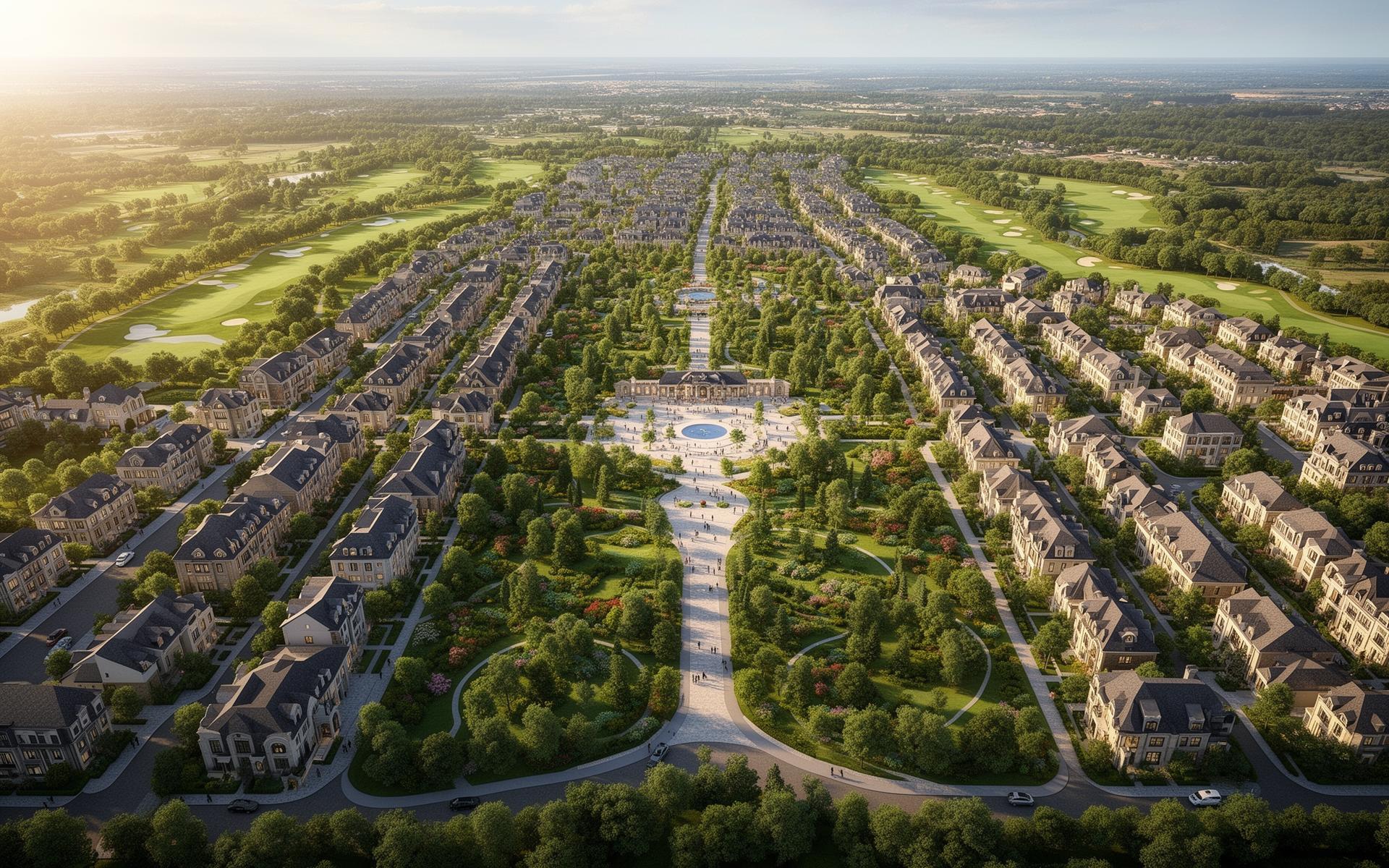
Does Combining Residential, Hospitality, Wellness and Sport Actually Work?
An honest synthesis of international evidence, including the schemes where integration failed to deliver.
Recommended reading paths
The investor journey
From how development value is created before construction to how integrated schemes are underwritten.
- 41How Land Consolidation Creates Development Value
- 42Why Planning Rights Can Be More Valuable Than Construction
- 43Senior Secured Development Finance Explained
- 44How Institutional Investors Assess Integrated Developments
- 45Why Phasing Matters More Than the Final Masterplan
- 46Does Combining Residential, Hospitality, Wellness and Sport Actually Work?
- 49What Can Go Wrong in a Multi-Use Lifestyle Development?
- 50The Integrated Community as a Long-Term Investment and Living Model
The living journey
What changes in how people want to live, and what a low-density community must deliver in return.
- 01Why Affluent Households Are Reconsidering Large-City Living
- 02Luxury Is Becoming Time, Privacy and Convenience
- 03The Rise of the 15-Minute Lifestyle Beyond the City
- 04Why Nature Is Becoming an Economic Asset
- 05From Second Home to Second Life
- 13How Far Are People Actually Willing to Walk?
- 20Why Residential Value Depends on Everything Outside the Home
- 40How a Large Estate Can Feel Intimate
The operator journey
Demand, seasonality and critical mass for hospitality, wellness, sport and food & beverage.
- 21Why Hospitality Can Accelerate Residential Demand
- 22Can Hotels and Permanent Residents Successfully Share One Destination?
- 24The Economics of a Food and Beverage Ecosystem
- 27From Spa to Everyday Wellness
- 30Who Pays for Wellness and Why?
- 35Can Sport Reduce Seasonality?
- 48How Much Population Does an Integrated Community Need?
The regional brief
Northern Italy read as a residential and investment region rather than as a holiday destination.
The Future of Where People Live
Why affluent households are re-evaluating the large city, and what they are looking for instead.
01Why Affluent Households Are Reconsidering Large-City Living
Congestion, cost and housing quality are pushing high-income households outward — but the evidence is more nuanced than the headlines suggest.
02Luxury Is Becoming Time, Privacy and Convenience
The premium segment is shifting from decorative excess towards time saved, health protected and daily friction removed.
03The Rise of the 15-Minute Lifestyle Beyond the City
The 15-minute city was written for dense urban fabric. Whether the logic survives at low density is an open, testable question.
04Why Nature Is Becoming an Economic Asset
Access to green space is increasingly measurable in health outcomes and in transaction prices — with important caveats about causation.
05From Second Home to Second Life
Second homes are being used more often, for longer, and by more people — changing what the product must provide.
Why Northern Italy
Accessibility, economic depth and relative value across the Milan–Lake Maggiore–Switzerland corridor.
06Northern Italy as a European Residential and Investment Region
Read as an economy rather than a holiday destination, Northern Italy competes with the strongest regions in Europe.
07The Milan–Lake Maggiore–Swiss Corridor
Airports, rail, cross-border employment and tourism make this corridor unusually connected for a low-density region.
08Why Piedmont Remains Less Expensive Than Better-Known Italian Regions
A pricing gap against Tuscany, Liguria and the Lombard lakes can reflect either mispricing or a genuine demand deficit. Both readings deserve testing.
09Climate, Landscape and Year-Round Liveability in Northern Italy
Four usable seasons are a commercial fact, not a lifestyle slogan — and future climate projections change the calculation.
10Can Piedmont Become a Global Lifestyle Destination?
The region has the assets. What it lacks is hospitality supply, international awareness and a coordinated narrative.
The Economics of Walkability
Separating a stated preference for walkability from measurable behaviour, pricing and design consequences.
11What People Really Mean When They Say They Want Walkability
Stated preference and revealed behaviour diverge sharply. Understanding the gap is the first step to designing for it.
12Do Walkable Communities Command a Property Premium?
Urban evidence for a walkability premium is reasonably strong. Evidence at low density is thinner and more conditional.
13How Far Are People Actually Willing to Walk?
Distance thresholds vary with age, weather, gradient, luggage and children — and design must respect those limits, not argue with them.
14Designing a Low-Density Community That Still Feels Connected
Street networks, shade, lighting and micro-mobility decide whether proximity on a plan becomes proximity in daily life.
15The Economic Value of Having Daily Life Within Reach
Reduced car dependence, longer stays and higher on-site spending are the measurable outputs of proximity.
The Residential Segment
Who buys into integrated communities, in which formats, and on what economics.
16Who Buys Homes in Integrated Lifestyle Communities?
Five buyer profiles, with different motivations, price sensitivities, usage patterns and exit horizons.
17Villas, Apartments or Serviced Residences?
Each format carries a different capital intensity, absorption rate and operating burden. Mixing them is a portfolio decision.
18The Economics of Low-Density Residential Development
Low density buys privacy and landscape, and pays for it in infrastructure per unit. The trade-off has to be priced explicitly.
19What Makes a Home Suitable for Both Living and Investment?
Flexibility, running costs, rentability and resale depth matter more than finish level for dual-purpose ownership.
20Why Residential Value Depends on Everything Outside the Home
Schools, restaurants, landscape and service quality explain more price variation between comparable homes than the homes themselves.
Hospitality, Food and Social Life
How hotels, restaurants and cultural programming generate discovery, frequency and year-round activity.
21Why Hospitality Can Accelerate Residential Demand
A hotel is a discovery channel, a service platform and a trial mechanism — but it rarely pays for itself on room revenue alone.
22Can Hotels and Permanent Residents Successfully Share One Destination?
Access control, noise, seasonality and governance determine whether coexistence adds value or erodes it.
23Why Restaurants Matter More Than Traditional Retail
Food and beverage generates the frequency and social density that small-scale retail in low-density settings cannot.
24The Economics of a Food and Beverage Ecosystem
Four demand pools — residents, hotel guests, day visitors and the local catchment — decide whether kitchens stay open in February.
25How Culture, Events and Gastronomy Turn a Development Into a Place
Programming is an operating discipline with a budget line, not a marketing afterthought.
Wellness, Health and Longevity
What the wellness real estate segment actually is, and who pays for it.
26Why Wellness Real Estate Has Become a Global Asset Class
The segment is real and growing, but its market sizing is looser than most published figures imply.
27From Spa to Everyday Wellness
An occasional treatment room and an environment that supports daily health are different products with different economics.
28How Nature, Movement and Social Connection Influence Wellbeing
The health evidence is substantial but frequently overstated in property marketing. This piece reads it carefully.
29Can Healthcare and Preventive Medicine Strengthen a Residential Community?
Clinics attract residents and complexity in equal measure: licensing, staffing and liability are the real constraints.
30Who Pays for Wellness and Why?
Residents, hotel guests, corporate clients, retirees and medical travellers each carry a different price tolerance and frequency.
Sport, Golf and Active Living
Recurring use, membership economics and the honest position of golf in contemporary development.
31The Changing Role of Golf in Residential Development
Golf still anchors land value in some markets and destroys operating margin in others. The distinction is demographic and hydrological.
32Do Golf Communities Still Command a Premium?
Premiums persist where the course is a landscape amenity for everyone, not a private facility for a minority.
33Beyond Golf: Building an All-Age Sports Ecosystem
Padel, cycling, swimming and children’s programmes generate far more visits per euro of capital than a course.
34How Sport Creates Repeated Use and Community
Clubs, leagues and coaching convert facilities into social infrastructure — the mechanism most amenity plans omit.
35Can Sport Reduce Seasonality?
Indoor capacity, training camps and local memberships are the three levers that flatten a demand curve.
Nature, Agriculture and Landscape
Landscape as infrastructure: identity, resilience, maintenance cost and pricing.
36Why Landscape Architecture Is a Core Investment Decision
Landscape sets identity on day one and maintenance liability for the next forty years.
37Productive Landscapes: Vineyards, Agriculture and Residential Value
Working land provides authenticity and revenue, but also machinery, seasonality, chemicals and regulation.
38Biodiversity as Infrastructure
Water management, soil, shade and habitat are performance systems with measurable capital and insurance consequences.
39The Value and Cost of Preserving Open Land
Unbuilt land is not free land: it carries maintenance, access, liability and opportunity cost.
40How a Large Estate Can Feel Intimate
Neighbourhood structure, landmarks, sightlines and edges decide whether scale reads as generosity or as emptiness.
Investment, Planning and Value Creation
Where value is created before construction: consolidation, entitlement, secured finance and phasing.
41How Land Consolidation Creates Development Value
Fragmented ownership is the single largest barrier to institutional-scale development in Italy — and therefore the largest source of value on removal.
42Why Planning Rights Can Be More Valuable Than Construction
Entitlement converts uncertainty into a defined product. That conversion, not the concrete, is where most of the risk premium sits.
43Senior Secured Development Finance Explained
Security, priority of repayment and covenants define the lender’s position long before any equity conversation begins.
44How Institutional Investors Assess Integrated Developments
Multi-use schemes are underwritten on management complexity and exit optionality as much as on projected returns.
45Why Phasing Matters More Than the Final Masterplan
A masterplan states an ambition. A phasing plan states how much capital is at risk before demand is proven.
The Integrated Destination Thesis
An honest synthesis: when integration creates value, and the conditions under which it fails.
46Does Combining Residential, Hospitality, Wellness and Sport Actually Work?
An honest synthesis of international evidence, including the schemes where integration failed to deliver.
47Which Amenities Reinforce Each Other — and Which Do Not?
An interaction matrix mapping which uses generate footfall for others, and which quietly compete for the same visit.
48How Much Population Does an Integrated Community Need?
Critical mass is the least discussed and most decisive variable in multi-use development.
49What Can Go Wrong in a Multi-Use Lifestyle Development?
Overbuilt amenities, service charges nobody modelled and weak management account for most documented failures.
50The Integrated Community as a Long-Term Investment and Living Model
The closing synthesis: not a verdict that integration works, but a specification of the conditions under which it can.
The full archive
Every article published to date, searchable and filterable.
Read the Journal by interest rather than by publication date. Each path is a sequence, not an archive.
The investor journey
8 articlesFrom how development value is created before construction to how integrated schemes are underwritten.
- 1How Land Consolidation Creates Development Value
- 2Why Planning Rights Can Be More Valuable Than Construction
- 3Senior Secured Development Finance Explained
- 4How Institutional Investors Assess Integrated Developments
- 5Why Phasing Matters More Than the Final Masterplan
- 6Does Combining Residential, Hospitality, Wellness and Sport Actually Work?
- 7What Can Go Wrong in a Multi-Use Lifestyle Development?In research
- 8The Integrated Community as a Long-Term Investment and Living ModelIn research
The living journey
8 articlesWhat changes in how people want to live, and what a low-density community must deliver in return.
- 1Why Affluent Households Are Reconsidering Large-City LivingIn research
- 2Luxury Is Becoming Time, Privacy and ConvenienceIn research
- 3The Rise of the 15-Minute Lifestyle Beyond the CityIn research
- 4Why Nature Is Becoming an Economic AssetIn research
- 5From Second Home to Second LifeIn research
- 6How Far Are People Actually Willing to Walk?In research
- 7Why Residential Value Depends on Everything Outside the Home
- 8How a Large Estate Can Feel IntimateIn research
The operator journey
7 articlesDemand, seasonality and critical mass for hospitality, wellness, sport and food & beverage.
- 1Why Hospitality Can Accelerate Residential Demand
- 2Can Hotels and Permanent Residents Successfully Share One Destination?In research
- 3The Economics of a Food and Beverage EcosystemIn research
- 4From Spa to Everyday WellnessIn research
- 5Who Pays for Wellness and Why?In research
- 6Can Sport Reduce Seasonality?
- 7How Much Population Does an Integrated Community Need?In research
The regional brief
5 articlesNorthern Italy read as a residential and investment region rather than as a holiday destination.
- 1Northern Italy as a European Residential and Investment Region
- 2The Milan–Lake Maggiore–Swiss CorridorIn research
- 3Why Piedmont Remains Less Expensive Than Better-Known Italian Regions
- 4Climate, Landscape and Year-Round Liveability in Northern ItalyIn research
- 5Can Piedmont Become a Global Lifestyle Destination?
Page 1 of 2