SPV Structures for European Real Estate: A Guide for Banks and Investors
Understanding Special Purpose Vehicle (SPV) structures for cross-border real estate investment. How UK holding companies combine with Italian operating entities for optimal governance.
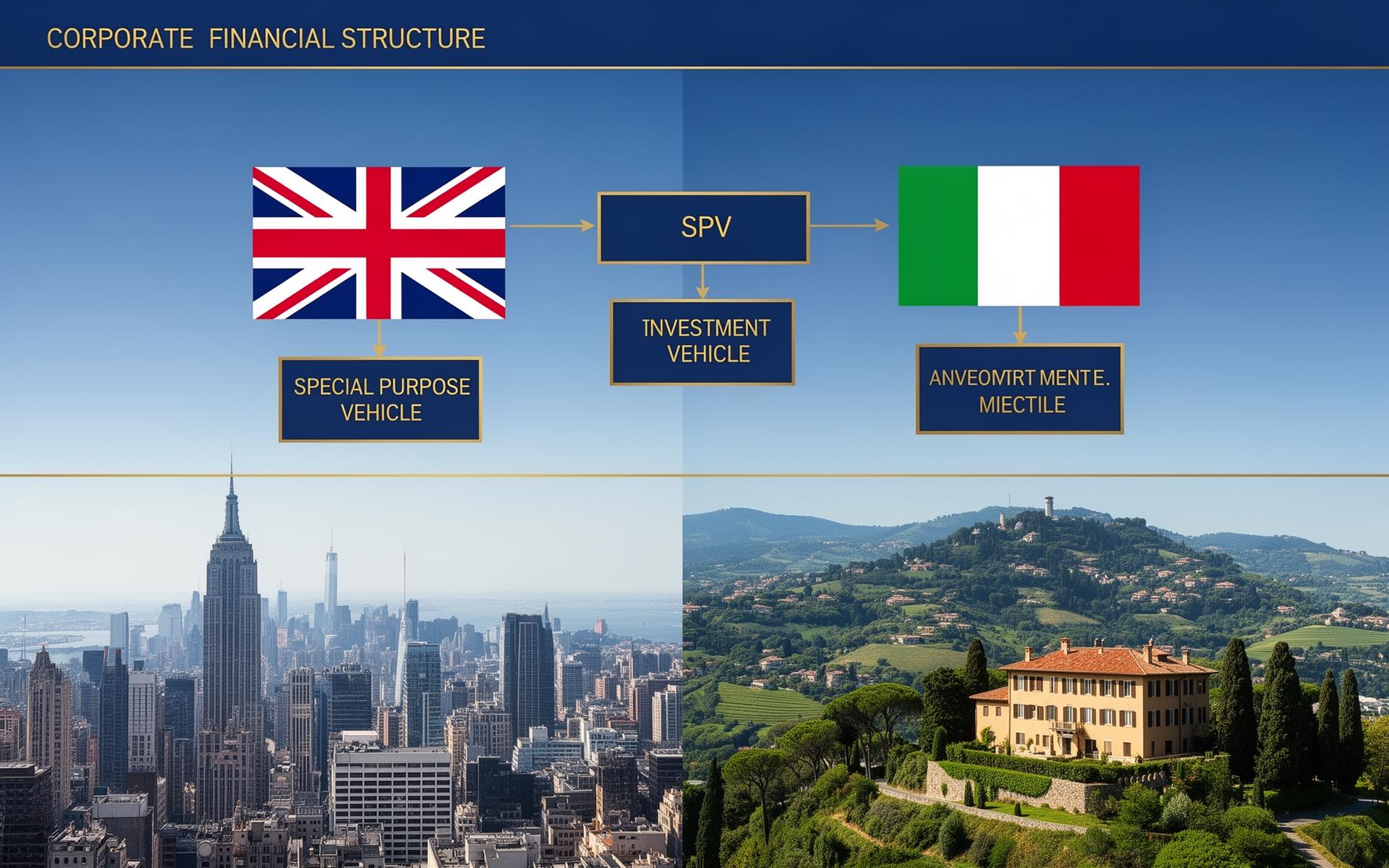
The SPV Approach to Real Estate Development
Special Purpose Vehicles (SPVs) have become the standard structure for institutional real estate investment. This article explains why and how they work in the context of European development.
What is an SPV?
An SPV is a subsidiary company created for a specific purpose — in our case, to hold and develop a defined real estate asset or portfolio. Key characteristics include:
- •Legal separation from parent company
- •Ring-fenced assets and liabilities
- •Clear governance structure
- •Transparent ownership chain
Why Use SPV Structures?
1. Risk Isolation
Each SPV contains risk within its specific project:
- •Lenders have recourse only to SPV assets
- •Parent company protected from project-specific issues
- •Investors can select specific risk profiles
2. Financing Flexibility
SPVs enable sophisticated capital structures:
- •Senior debt at project level
- •Mezzanine financing for specific phases
- •Equity co-investment opportunities
- •Clear security packages for lenders
3. Exit Optionality
SPVs provide multiple exit paths:
- •Asset sale (property transfer)
- •Share sale (SPV transfer)
- •Partial sales to co-investors
- •IPO or REIT conversion
4. Tax Efficiency
Properly structured SPVs can optimize tax treatment:
- •Withholding tax reduction through treaties
- •Participation exemptions on dividends
- •Capital gains treatment optimization
- •Interest deductibility at appropriate levels
Corporate Structure
Futuro Agrate Ltd employs a tiered structure:
Futuro Agrate Ltd (UK)
├── Italian OpCo 1 (Villas)
├── Italian OpCo 2 (Hotel)
└── Italian OpCo 3 (Infrastructure)
└── [Future Development SPVs]
Benefits of UK Corporate Structure:
- •Common law corporate governance
- •Extensive treaty network
- •Established legal precedent
- •Familiar to international investors
Banking Considerations
For lending institutions, our structure provides:
Security Package
- •Share pledge over SPV
- •Asset-level mortgages in Italy
- •Corporate guarantee options
- •Cash flow covenants
Reporting Standards
- •Quarterly financial reporting
- •Annual audited accounts
- •Development milestone tracking
- •Covenant compliance certificates
Due Diligence Access
- •Clear corporate documentation
- •Transparent ownership chain
- •Accessible management team
- •Professional advisors (legal, tax, technical)
Investor Entry Points
We offer participation at multiple levels:
- •SPV Level — Co-investment in Futuro Agrate Ltd
- •Project Level — Specific asset class participation
- •Unit Level — Individual property acquisition
Regulatory Compliance
Our structure complies with:
- •UK Companies Act 2006
- •Italian Civil Code
- •EU Anti-Money Laundering Directives
- •FATCA and CRS reporting requirements
- •UK Beneficial Ownership Register
Institutional-grade structure for institutional-grade investment.
Sources and verification
Primary sources consulted
- Banca d’Italia — Italian Housing Market Survey and regional economies reports bancaditalia.it
- Agenzia delle Entrate — Flat-tax regime for new residents (art. 24-bis TUIR)
- Eurostat — House price index and regional statistics ec.europa.eu
Figures presented as ranges, uplifts or returns are model estimates based on the sources below. They are not measurements of this site and not a promise of performance.
Read the Journal by interest rather than by publication date. Each path is a sequence, not an archive.
The investor journey
8 articlesFrom how development value is created before construction to how integrated schemes are underwritten.
You are here · Step 3 of 8
- 1How Land Consolidation Creates Development Value
- 2Why Planning Rights Can Be More Valuable Than Construction
- 3Senior Secured Development Finance Explained
- 4How Institutional Investors Assess Integrated Developments
- 5Why Phasing Matters More Than the Final Masterplan
- 6Does Combining Residential, Hospitality, Wellness and Sport Actually Work?
- 7What Can Go Wrong in a Multi-Use Lifestyle Development?In research
- 8The Integrated Community as a Long-Term Investment and Living ModelIn research
The living journey
8 articlesWhat changes in how people want to live, and what a low-density community must deliver in return.
- 1Why Affluent Households Are Reconsidering Large-City LivingIn research
- 2Luxury Is Becoming Time, Privacy and ConvenienceIn research
- 3The Rise of the 15-Minute Lifestyle Beyond the CityIn research
- 4Why Nature Is Becoming an Economic AssetIn research
- 5From Second Home to Second LifeIn research
- 6How Far Are People Actually Willing to Walk?In research
- 7Why Residential Value Depends on Everything Outside the Home
- 8How a Large Estate Can Feel IntimateIn research
The operator journey
7 articlesDemand, seasonality and critical mass for hospitality, wellness, sport and food & beverage.
- 1Why Hospitality Can Accelerate Residential Demand
- 2Can Hotels and Permanent Residents Successfully Share One Destination?In research
- 3The Economics of a Food and Beverage EcosystemIn research
- 4From Spa to Everyday WellnessIn research
- 5Who Pays for Wellness and Why?In research
- 6Can Sport Reduce Seasonality?
- 7How Much Population Does an Integrated Community Need?In research
The regional brief
5 articlesNorthern Italy read as a residential and investment region rather than as a holiday destination.
- 1Northern Italy as a European Residential and Investment Region
- 2The Milan–Lake Maggiore–Swiss CorridorIn research
- 3Why Piedmont Remains Less Expensive Than Better-Known Italian Regions
- 4Climate, Landscape and Year-Round Liveability in Northern ItalyIn research
- 5Can Piedmont Become a Global Lifestyle Destination?
Investment, Planning and Value Creation
Article 3 of 5Why Planning Rights Can Be More Valuable Than Construction
How Institutional Investors Assess Integrated Developments