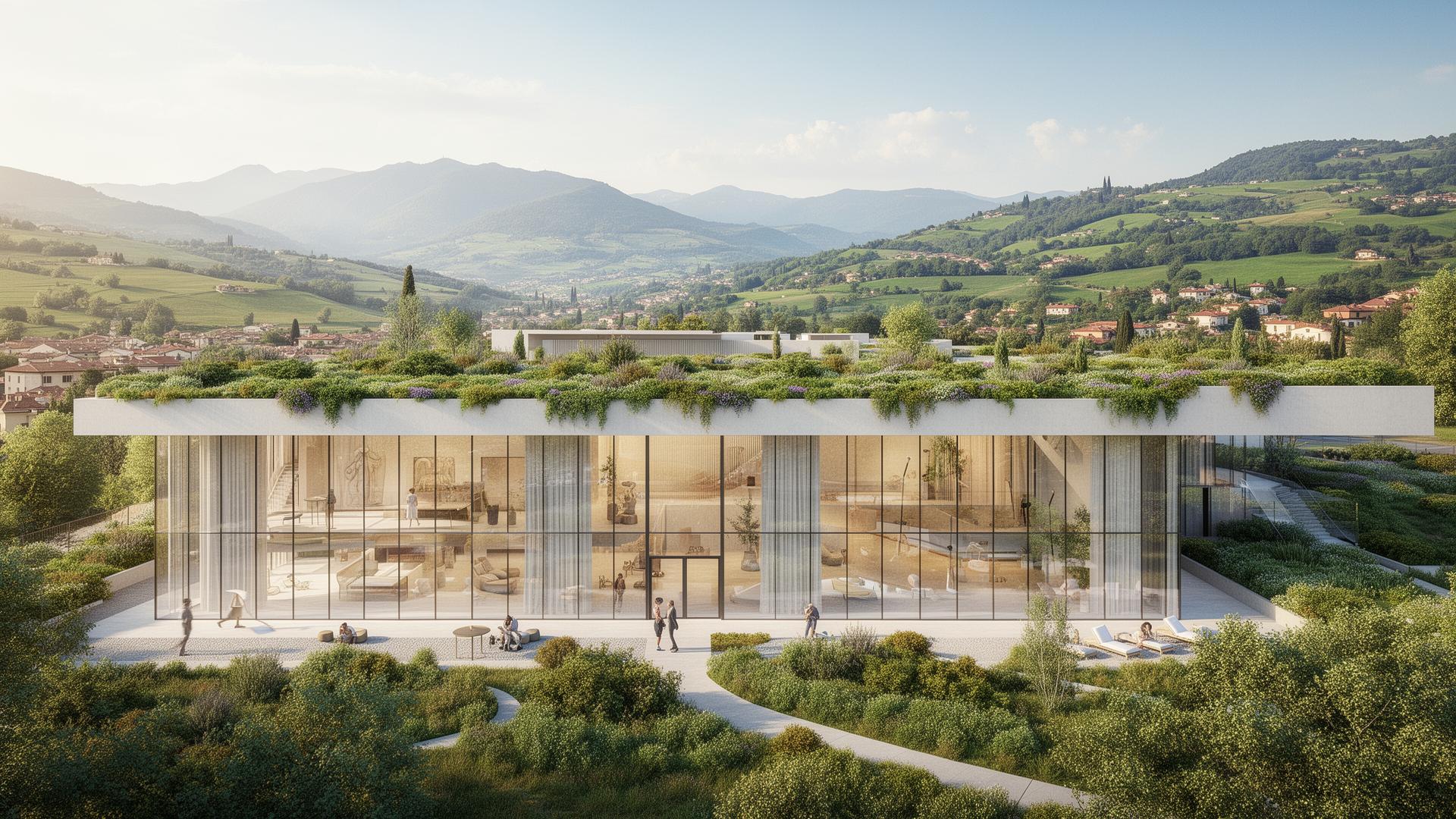
Scarcity Economics of Large-Scale European Land Assets
Why contiguous, master-planned land banks above 100 hectares behave differently from fragmented plots — a structural look at supply, regulation and capital formation in Northern Italy.
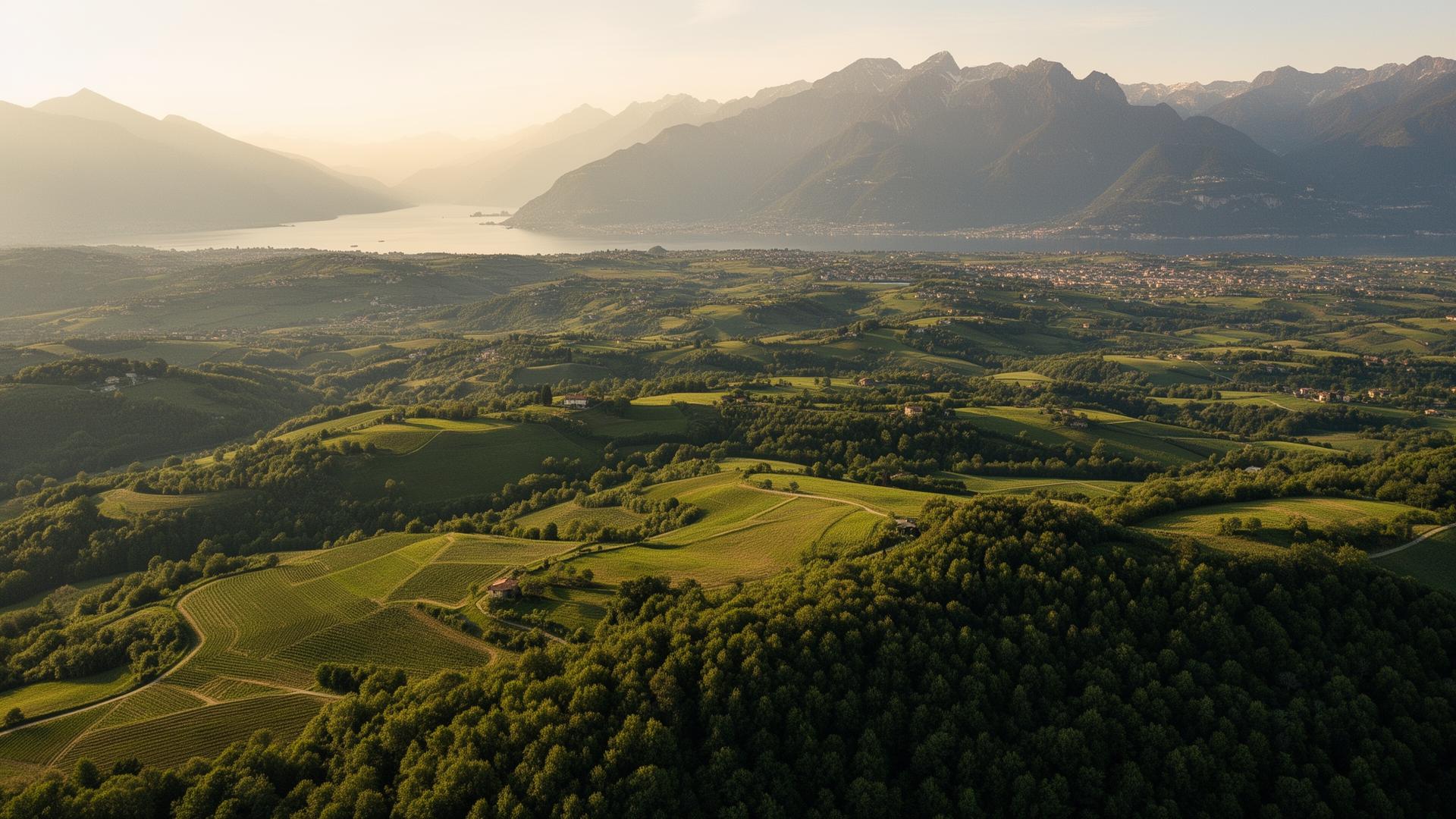
A structural view of land supply
The European market for developable land of institutional scale is materially thinner than headline transaction volumes suggest. Most reported activity concerns individual plots below five hectares; contiguous holdings above one hundred hectares, with a single ownership perimeter and a coherent planning framework, represent a small share of recorded supply.
Why scale changes the asset
A contiguous land bank is not a multiple of small plots. Beyond a certain threshold — typically estimated by Italian planning practice at 50–80 hectares — the asset moves from "real estate" into the category of territorial infrastructure. Three differences are usually highlighted in academic and industry literature:
- •Planning interaction. Above this scale the project is generally negotiated through a Piano Attuativo (implementation plan) or a Programma Integrato di Intervento, rather than approved as a sum of individual building permits. The counterparty for the developer becomes the municipality and the region, not only the technical office.
- •Infrastructure internalisation. Roads, utilities, retention basins and public works can be designed once and amortised across the full perimeter, instead of being duplicated by neighbouring owners.
- •Use-mix optimisation. A coherent perimeter allows residential, hospitality, education and green infrastructure to be allocated according to topography and exposure, rather than dictated by historic parcel boundaries.
Supply constraints in Northern Italy
Several long-running factors limit the formation of new large-scale perimeters in the Lake Maggiore – Milan corridor:
- •Historic fragmentation of cadastral ownership, inherited from the 19th-century post-Napoleonic land reform, which makes aggregation a multi-year process.
- •Strong landscape protection under the Codice dei beni culturali e del paesaggio (Legislative Decree 42/2004) across pre-Alpine and lakeside areas.
- •Stable population in adjacent metropolitan areas combined with limited new urbanisation under regional Territorial Government Plans (Piano di Governo del Territorio, PGT).
These factors are documented in periodic reports by Banca d'Italia, Scenari Immobiliari and the OECD's territorial reviews, and tend to compress the addressable supply rather than expand it over the medium term.
Capital formation and governance
Large perimeters typically require a governance vehicle that separates land ownership from individual asset operation. The Italian and UK markets converge here on the Special Purpose Vehicle (SPV) model, in which a holding entity controls the land and dedicated sub-vehicles manage specific asset classes (residential, hospitality, education). The structure is neutral with respect to investor profile and is used by both family offices and institutional partners.
Implications for valuation
For investors, the relevant question is not whether prices in a given postcode are rising, but whether the underlying perimeter is replicable. Where it is not — because of regulatory protection, fragmented ownership or topographical constraints — the asset tends to exhibit lower correlation with short-term residential cycles and a longer planning horizon.
This is the analytical frame in which the Futuro Agrate perimeter is positioned: a contiguous master-planned territory in a regulated landscape, evaluated against the structural characteristics of European land supply rather than against speculative comparables.
This article is editorial. It does not constitute investment advice and references publicly available regulatory and statistical sources.
Sources and verification
Primary sources consulted
- ISTAT — Demography, housing and regional accounts series istat.it
- Regione Piemonte — Territorial and planning documentation (PTR, PPR) regione.piemonte.it
- Eurostat — House price index and regional statistics ec.europa.eu
- Savills Research — European residential and second-home market reports
Figures presented as ranges, uplifts or returns are model estimates based on the sources below. They are not measurements of this site and not a promise of performance.
Read the Journal by interest rather than by publication date. Each path is a sequence, not an archive.
The investor journey
8 articlesFrom how development value is created before construction to how integrated schemes are underwritten.
- 1How Land Consolidation Creates Development Value
- 2Why Planning Rights Can Be More Valuable Than Construction
- 3Senior Secured Development Finance Explained
- 4How Institutional Investors Assess Integrated Developments
- 5Why Phasing Matters More Than the Final Masterplan
- 6Does Combining Residential, Hospitality, Wellness and Sport Actually Work?
- 7What Can Go Wrong in a Multi-Use Lifestyle Development?In research
- 8The Integrated Community as a Long-Term Investment and Living ModelIn research
The living journey
8 articlesWhat changes in how people want to live, and what a low-density community must deliver in return.
- 1Why Affluent Households Are Reconsidering Large-City LivingIn research
- 2Luxury Is Becoming Time, Privacy and ConvenienceIn research
- 3The Rise of the 15-Minute Lifestyle Beyond the CityIn research
- 4Why Nature Is Becoming an Economic AssetIn research
- 5From Second Home to Second LifeIn research
- 6How Far Are People Actually Willing to Walk?In research
- 7Why Residential Value Depends on Everything Outside the Home
- 8How a Large Estate Can Feel IntimateIn research
The operator journey
7 articlesDemand, seasonality and critical mass for hospitality, wellness, sport and food & beverage.
- 1Why Hospitality Can Accelerate Residential Demand
- 2Can Hotels and Permanent Residents Successfully Share One Destination?In research
- 3The Economics of a Food and Beverage EcosystemIn research
- 4From Spa to Everyday WellnessIn research
- 5Who Pays for Wellness and Why?In research
- 6Can Sport Reduce Seasonality?
- 7How Much Population Does an Integrated Community Need?In research
The regional brief
5 articlesNorthern Italy read as a residential and investment region rather than as a holiday destination.
- 1Northern Italy as a European Residential and Investment Region
- 2The Milan–Lake Maggiore–Swiss CorridorIn research
- 3Why Piedmont Remains Less Expensive Than Better-Known Italian Regions
- 4Climate, Landscape and Year-Round Liveability in Northern ItalyIn research
- 5Can Piedmont Become a Global Lifestyle Destination?
The Residential Segment
Article 3 of 5Villas, Apartments or Serviced Residences?
What Makes a Home Suitable for Both Living and Investment?