GCC Capital Flows to Europe 2025–2030: Why Italy Is the New Frontier
Gulf sovereign wealth funds are redirecting $50B+ annually toward European real assets. Italy — with its Golden Visa reforms, strategic location, and lifestyle premium — is emerging as the top destination. Here's what this means for Piemonte development.
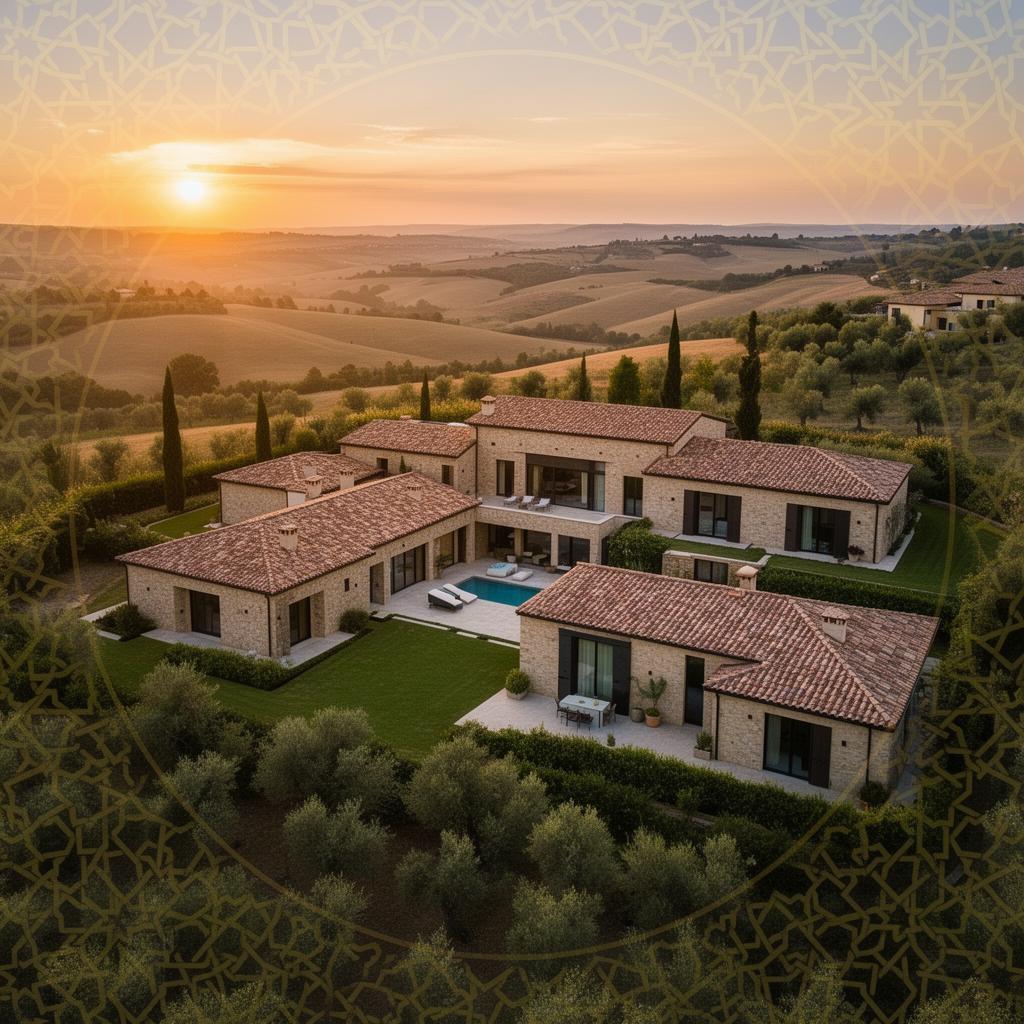
The Great Rebalancing: GCC Capital Looks West
The global investment landscape is undergoing a structural transformation. As geopolitical tensions reshape trade corridors, energy transition accelerates, and Gulf Cooperation Council (GCC) nations pursue aggressive economic diversification under their respective Vision programs — a historic wave of sovereign and private capital is flowing from the Arabian Gulf toward Europe.
This isn't speculative. It's happening now, and the data is compelling.
The Macro Picture: $50 Billion+ Annually
According to data from the OECD, Knight Frank, and regional sovereign wealth fund disclosures:
| Metric | 2020 | 2023 | 2025 (Est.) | 2030 (Proj.) |
|---|---|---|---|---|
| GCC outbound FDI to Europe (€B) | 18 | 35 | 52 | 80+ |
| Share allocated to real estate | 28% | 34% | 38% | 42% |
| Italy's share of European RE FDI | 4% | 8% | 12% | 18% |
The key drivers behind this acceleration:
- •Post-oil diversification — Saudi Vision 2030, UAE Centennial Plan, Qatar National Vision 2030 mandate massive portfolio rebalancing away from hydrocarbons
- •Euro zone stability — Despite inflation challenges, the Euro remains an attractive store of value for GCC investors seeking currency diversification
- •Geopolitical hedging — Increasing tensions in Asia-Pacific and US policy unpredictability drive capital toward "neutral" European havens
- •Lifestyle migration — A growing cohort of UHNW Gulf families seek European residency for education, healthcare, and quality of life
Why Italy Is Rising: Five Structural Advantages
1. Golden Visa & Flat Tax Reforms
Italy's flat tax regime for new residents (€100,000/year for non-domiciled individuals, extendable to family members at €25,000 each) is one of Europe's most competitive. Combined with the investor visa pathway requiring a minimum €500,000 investment in Italian companies or €1M in government bonds, Italy offers a uniquely attractive fiscal environment.
For GCC nationals accustomed to zero personal income tax, Italy's flat-tax option provides a familiar low-tax structure with full European residency rights.
2. Strategic Mediterranean Position
Italy sits at the crossroads of:
- •Three continents — direct flight connections to all GCC capitals (4–6 hours)
- •European market access — gateway to the EU's 450M consumer market
- •Cultural bridge — historic trading relationships with the Arab world spanning millennia
Milan Malpensa International Airport — 25 km from the Futuro Agrate territory — offers direct flights to Dubai, Abu Dhabi, Doha, Riyadh, and Jeddah.
3. Real Asset Value Gap
Italian real estate, particularly in secondary luxury markets, remains significantly undervalued compared to London, Paris, Geneva, or the Côte d'Azur:
| Location | Luxury Villa $/sqm | Golf Community Premium |
|---|---|---|
| Côte d'Azur | €12,000–25,000 | +40% |
| Lake Geneva | €15,000–30,000 | +35% |
| Mallorca | €8,000–15,000 | +30% |
| Lake Como | €8,000–18,000 | +25% |
| Piemonte (Futuro Agrate) | €5,500–8,500 | +50% potential |
This value gap represents a once-in-a-cycle entry point for investors who understand mean reversion in luxury real estate markets.
4. ESG & Sustainability Alignment
GCC sovereign funds are increasingly mandated to deploy capital into ESG-compliant assets. Italy's regulatory framework for sustainable development, combined with Piemonte's natural environment and the Futuro Agrate masterplan's green infrastructure commitments (30% protected green space, renewable energy integration, biodiversity corridors), creates a compelling ESG narrative.
5. Lifestyle Premium: The "Italian Dream"
For Gulf families, Italy represents the ultimate lifestyle destination:
- •International schooling — proximity to international schools and universities
- •Healthcare excellence — Italy's healthcare system ranked #2 globally by WHO
- •Cultural richness — art, cuisine, fashion, and la dolce vita
- •Climate compatibility — Mediterranean climate offers a familiar warmth without extreme heat
- •Privacy and security — gated communities in rural Piemonte offer discretion unavailable in urban centers
GCC Investment Patterns: What They're Buying
Recent deal flow reveals clear preferences among Gulf investors in Italian real estate:
Sovereign Wealth Funds:
- •ADIA (Abu Dhabi) — €2.1B in Italian logistics and hospitality (2023–2025)
- •QIA (Qatar) — Significant stakes in Italian luxury brands and hospitality groups
- •PIF (Saudi Arabia) — Strategic investments in Italian infrastructure and tourism
Family Offices & UHNW Individuals:
- •Luxury villa portfolios in Tuscany, Sardinia, and Lake Como
- •Golf resort developments and branded residences
- •Agricultural estates with wine and olive oil production
- •Boutique hospitality projects
Emerging Trend: Master-Planned Communities
The most sophisticated Gulf investors are moving beyond individual property acquisition toward master-planned community investments — seeking the scale, control, and brand-building opportunities that single-asset purchases cannot provide.
This is precisely the model that Futuro Agrate offers: a 215.3-hectare greenfield territory with approved urbanization, controlled by a single master developer, with the capacity to accommodate a complete lifestyle ecosystem.
The Piemonte Opportunity: Timing
Several converging factors make the 2025–2030 window uniquely favorable for GCC investment in Piemonte:
- •Pre-appreciation entry — The Milan-Lakes corridor is following the trajectory of Como and Tuscany with a 5–7 year lag
- •Infrastructure investment — €4.5B in regional infrastructure upgrades (motorways, rail, airports) are underway
- •Post-Olympics momentum — The Milano Cortina 2026 Winter Olympics are elevating Northern Italy's global profile
- •Limited supply — Greenfield development sites of 100+ hectares are virtually non-existent in Northern Italy
- •Regulatory clarity — Italian urbanization and building permits provide legal certainty uncommon in many emerging markets
Risk Factors & Mitigation
Sophisticated investors rightly assess risks:
| Risk | Assessment | Mitigation |
|---|---|---|
| Italian bureaucracy | Moderate | Pre-approved urbanization eliminates primary regulatory risk |
| Currency exposure | Low-Medium | Euro-denominated assets provide USD/SAR diversification |
| Liquidity | Medium | 3–5 year hold periods; exit via individual lot sales |
| Political risk | Low | Italy's EU/NATO membership provides institutional stability |
| Construction execution | Low | Established local contractor network; phased development |
Implications for Futuro Agrate
The confluence of GCC capital seeking European real assets and Piemonte's emergence as a luxury destination creates a strategic alignment that few projects can exploit:
- •Scale — 215.3 hectares accommodates community-level investment, not just individual villas
- •Customization — Master developer model allows tailoring to Gulf lifestyle preferences (privacy, family compounds, halal hospitality options)
- •Brand potential — First-mover advantage in establishing Piemonte as a recognized luxury destination for GCC buyers
- •Co-investment structure — Flexible equity participation models aligned with Islamic finance principles (Murabaha, Ijara structures available)
Conclusion: A $80 Billion Tailwind
The structural shift of GCC capital toward European real assets is not a trend — it's a generational reallocation. Italy's combination of fiscal incentives, lifestyle premium, real asset value gaps, and strategic positioning makes it the natural beneficiary of this flow.
For investors evaluating the Futuro Agrate territory, the question is not whether Gulf capital will arrive in Piemonte — but who will be positioned to capture it when it does.
Futuro Agrate Ltd — Strategic positioning at the intersection of Gulf capital and Italian excellence.
Editorial note: this article is for information purposes and does not constitute investment advice.
Sources and verification
Primary sources consulted
- Knight Frank — The Wealth Report, prime residential indices
- Savills Research — European residential and second-home market reports
- Banca d’Italia — Italian Housing Market Survey and regional economies reports bancaditalia.it
- Agenzia delle Entrate — Flat-tax regime for new residents (art. 24-bis TUIR)
Figures presented as ranges, uplifts or returns are model estimates based on the sources below. They are not measurements of this site and not a promise of performance.
Read the Journal by interest rather than by publication date. Each path is a sequence, not an archive.
The investor journey
8 articlesFrom how development value is created before construction to how integrated schemes are underwritten.
You are here · Step 4 of 8
- 1How Land Consolidation Creates Development Value
- 2Why Planning Rights Can Be More Valuable Than Construction
- 3Senior Secured Development Finance Explained
- 4How Institutional Investors Assess Integrated Developments
- 5Why Phasing Matters More Than the Final Masterplan
- 6Does Combining Residential, Hospitality, Wellness and Sport Actually Work?
- 7What Can Go Wrong in a Multi-Use Lifestyle Development?In research
- 8The Integrated Community as a Long-Term Investment and Living ModelIn research
The living journey
8 articlesWhat changes in how people want to live, and what a low-density community must deliver in return.
- 1Why Affluent Households Are Reconsidering Large-City LivingIn research
- 2Luxury Is Becoming Time, Privacy and ConvenienceIn research
- 3The Rise of the 15-Minute Lifestyle Beyond the CityIn research
- 4Why Nature Is Becoming an Economic AssetIn research
- 5From Second Home to Second LifeIn research
- 6How Far Are People Actually Willing to Walk?In research
- 7Why Residential Value Depends on Everything Outside the Home
- 8How a Large Estate Can Feel IntimateIn research
The operator journey
7 articlesDemand, seasonality and critical mass for hospitality, wellness, sport and food & beverage.
- 1Why Hospitality Can Accelerate Residential Demand
- 2Can Hotels and Permanent Residents Successfully Share One Destination?In research
- 3The Economics of a Food and Beverage EcosystemIn research
- 4From Spa to Everyday WellnessIn research
- 5Who Pays for Wellness and Why?In research
- 6Can Sport Reduce Seasonality?
- 7How Much Population Does an Integrated Community Need?In research
The regional brief
5 articlesNorthern Italy read as a residential and investment region rather than as a holiday destination.
- 1Northern Italy as a European Residential and Investment Region
- 2The Milan–Lake Maggiore–Swiss CorridorIn research
- 3Why Piedmont Remains Less Expensive Than Better-Known Italian Regions
- 4Climate, Landscape and Year-Round Liveability in Northern ItalyIn research
- 5Can Piedmont Become a Global Lifestyle Destination?
Investment, Planning and Value Creation
Article 4 of 5Senior Secured Development Finance Explained
Why Phasing Matters More Than the Final Masterplan