ESG-Driven Development: Building Sustainable Communities in Italy
How environmental, social, and governance principles shape modern territory development. Our commitment to sustainable growth and long-term value creation.
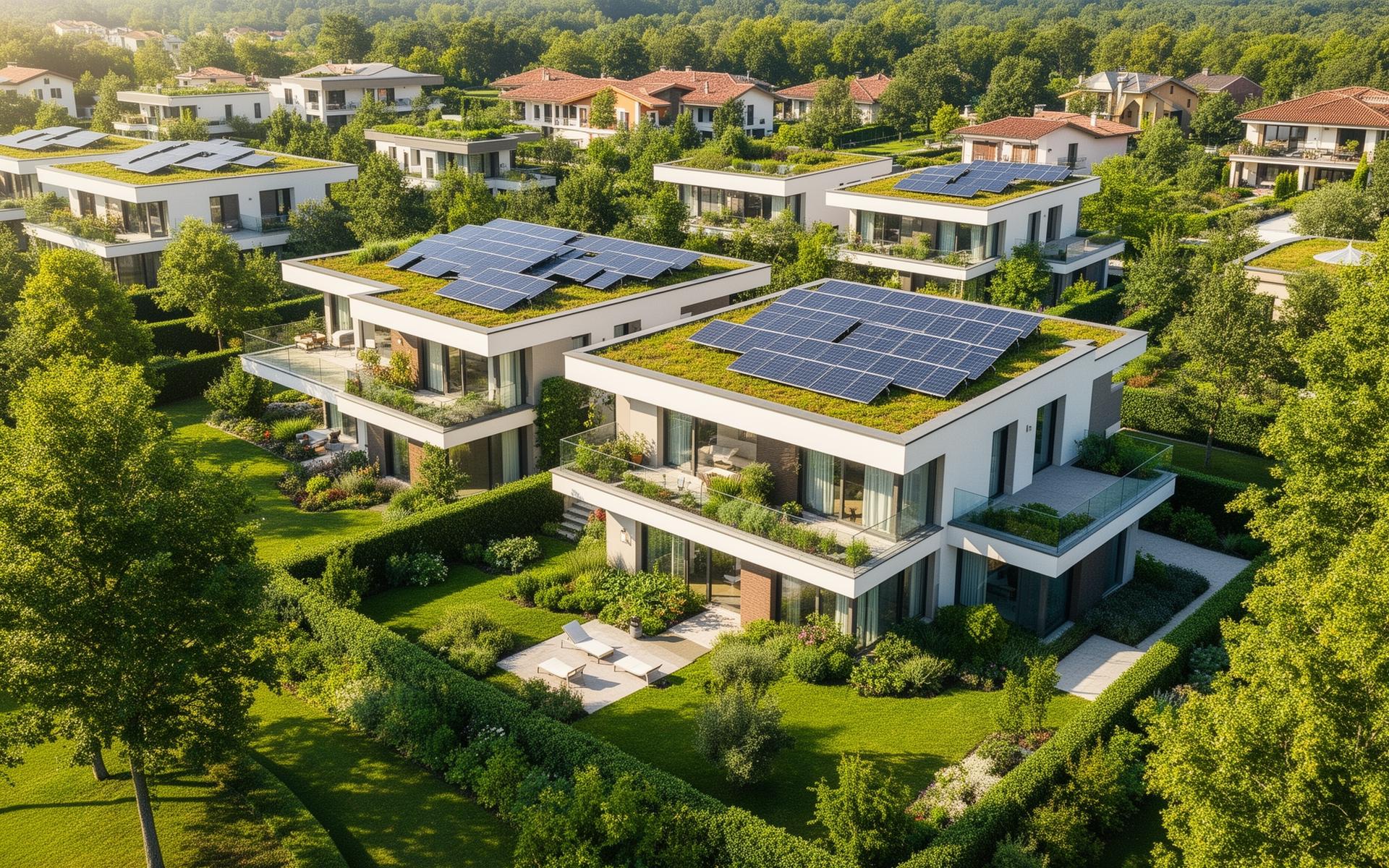
Sustainability as Investment Strategy
ESG (Environmental, Social, Governance) principles are no longer optional in real estate development. They represent both ethical imperative and investment optimization. Here's how we integrate sustainability into every aspect of our development.
Environmental Commitments
Energy Efficiency
- •All buildings designed to NZEB (Near Zero Energy Building) standards
- •Solar panel integration on appropriate structures
- •Ground-source heat pump systems for climate control
- •LED lighting throughout common areas
Green Infrastructure
- •40% of total territory preserved as green space
- •Native species landscaping reducing irrigation needs
- •Stormwater management through natural drainage systems
- •Biodiversity corridors connecting natural areas
Materials and Construction
- •Locally-sourced materials where possible
- •Low-VOC paints and finishes
- •Recycled content in construction materials
- •Waste reduction and recycling during construction
Social Value Creation
Community Design
- •Walkable neighborhoods reducing car dependency
- •Public spaces encouraging social interaction
- •Accessible design for all ability levels
- •Mixed-use planning promoting local commerce
Local Employment
- •Commitment to local workforce during construction
- •Operational jobs in hospitality, retail, and services
- •Training programs for local residents
- •Partnership with regional vocational schools
Education and Healthcare
- •School integrated into masterplan
- •Kindergarten for young families
- •Medical clinic serving residents and guests
- •Collaboration with local healthcare providers
Governance Standards
Transparency
- •Regular ESG reporting to stakeholders
- •Third-party sustainability audits
- •Clear policies publicly available
- •Stakeholder engagement processes
Ethical Business
- •Anti-corruption policies
- •Supplier code of conduct
- •Whistleblower protections
- •Board diversity commitments
Certification Targets
We pursue recognized sustainability certifications:
- •BREEAM Communities for masterplan
- •LEED or equivalent for individual buildings
- •WELL Building Standard for occupant health
- •Energy Performance Certificate Class A ratings
Investment Implications
ESG-focused development delivers superior returns:
- •Lower operating costs through efficiency
- •Premium pricing from quality-conscious buyers
- •Reduced regulatory risk as standards tighten
- •Enhanced liquidity from growing ESG investor pool
- •Brand value attracting tenants and partners
Our Sustainability Pledge
"Land development on this scale is measured in decades, not quarters; the relevant horizon is generational rather than cyclical."
Sustainability is integral to our value proposition.
Sources and verification
Primary sources consulted
- European Environment Agency — Environmental indicators for Northern Italy eea.europa.eu
- Eurostat — House price index and regional statistics ec.europa.eu
- Regione Piemonte — Territorial and planning documentation (PTR, PPR) regione.piemonte.it
Figures presented as ranges, uplifts or returns are model estimates based on the sources below. They are not measurements of this site and not a promise of performance.
Read the Journal by interest rather than by publication date. Each path is a sequence, not an archive.
The investor journey
8 articlesFrom how development value is created before construction to how integrated schemes are underwritten.
- 1How Land Consolidation Creates Development Value
- 2Why Planning Rights Can Be More Valuable Than Construction
- 3Senior Secured Development Finance Explained
- 4How Institutional Investors Assess Integrated Developments
- 5Why Phasing Matters More Than the Final Masterplan
- 6Does Combining Residential, Hospitality, Wellness and Sport Actually Work?
- 7What Can Go Wrong in a Multi-Use Lifestyle Development?In research
- 8The Integrated Community as a Long-Term Investment and Living ModelIn research
The living journey
8 articlesWhat changes in how people want to live, and what a low-density community must deliver in return.
- 1Why Affluent Households Are Reconsidering Large-City LivingIn research
- 2Luxury Is Becoming Time, Privacy and ConvenienceIn research
- 3The Rise of the 15-Minute Lifestyle Beyond the CityIn research
- 4Why Nature Is Becoming an Economic AssetIn research
- 5From Second Home to Second LifeIn research
- 6How Far Are People Actually Willing to Walk?In research
- 7Why Residential Value Depends on Everything Outside the Home
- 8How a Large Estate Can Feel IntimateIn research
The operator journey
7 articlesDemand, seasonality and critical mass for hospitality, wellness, sport and food & beverage.
- 1Why Hospitality Can Accelerate Residential Demand
- 2Can Hotels and Permanent Residents Successfully Share One Destination?In research
- 3The Economics of a Food and Beverage EcosystemIn research
- 4From Spa to Everyday WellnessIn research
- 5Who Pays for Wellness and Why?In research
- 6Can Sport Reduce Seasonality?
- 7How Much Population Does an Integrated Community Need?In research
The regional brief
5 articlesNorthern Italy read as a residential and investment region rather than as a holiday destination.
- 1Northern Italy as a European Residential and Investment Region
- 2The Milan–Lake Maggiore–Swiss CorridorIn research
- 3Why Piedmont Remains Less Expensive Than Better-Known Italian Regions
- 4Climate, Landscape and Year-Round Liveability in Northern ItalyIn research
- 5Can Piedmont Become a Global Lifestyle Destination?
Nature, Agriculture and Landscape
Article 3 of 5Productive Landscapes: Vineyards, Agriculture and Residential Value
The Value and Cost of Preserving Open Land